Localized player checkout
Present eligible methods, currencies, authentication, and return states in a focused cashier flow.
Review method strategyDeposit → decision → payout
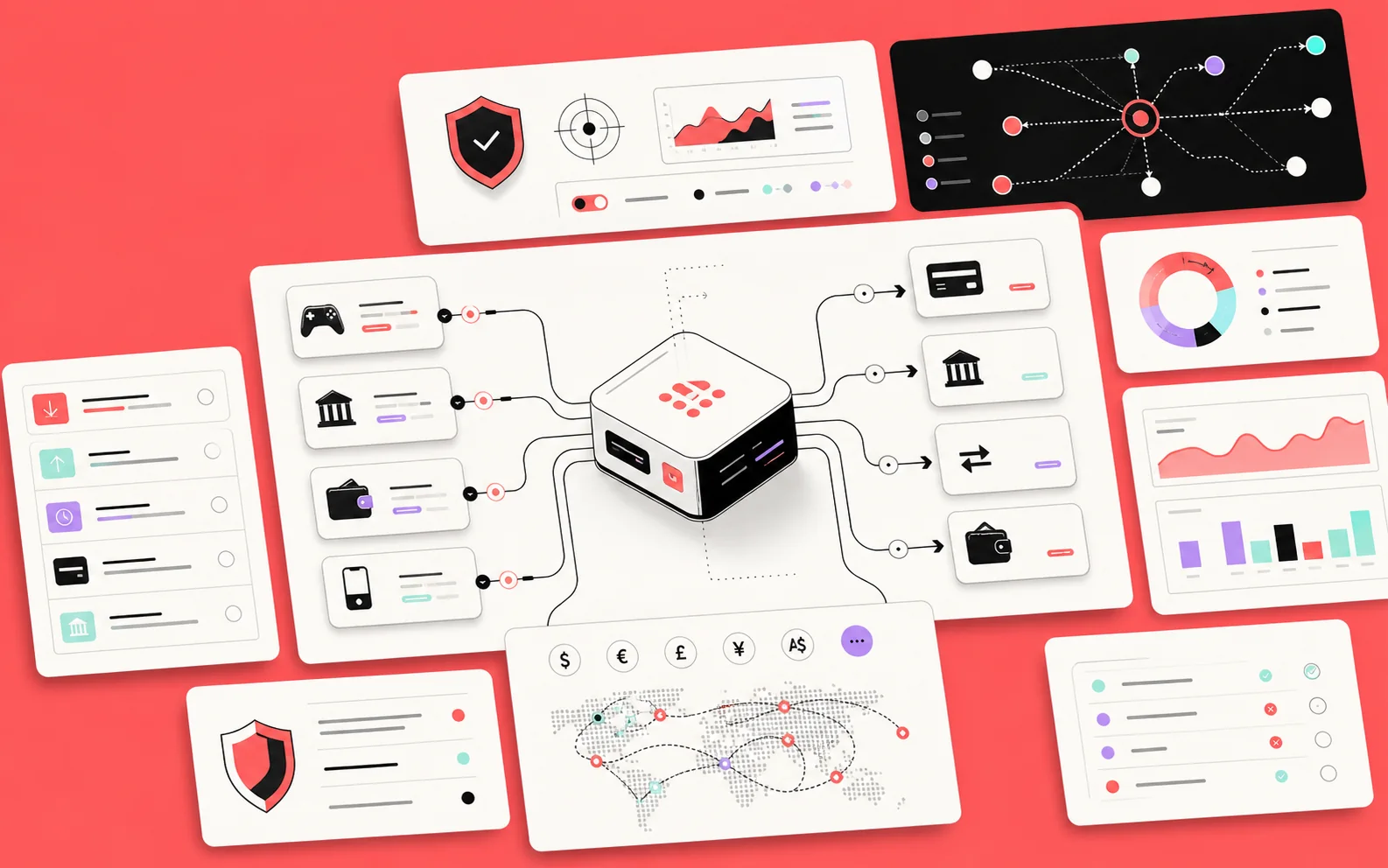
Our igaming payment gateway is a commercial payment service for eligible operators: connect player payment methods, route transactions, coordinate risk signals, and reconcile every state through one operating layer.
The operating layer
A cashier is only the visible edge. The gateway keeps product, risk, finance, and support working from the same transaction story.
Present eligible methods, currencies, authentication, and return states in a focused cashier flow.
Review method strategyUse configured context to select a route, recover from eligible failures, and explain each decision.
See platform controlsConnect fraud, KYC, AML, authentication, velocity, and responsible-play signals without obscuring ownership.
Map control ownershipKeep deposits, refunds, reversals, withdrawals, payouts, disputes, and settlement references traceable.
Explore the event modelTwo-way payment flow
Both directions use the same account, risk, routing, and reporting context. Teams can follow a transaction from player action to final financial state.
Walk through the lifecyclePayment choice
Method coverage is designed market by market. No inflated count replaces the work of checking eligibility, currency, settlement, refund, and payout behavior.
Build the method mixFrom scope to production
Technical integration and payment-partner approval progress together, but they are not the same milestone.
Entity, jurisdictions, product, player flow, methods, currencies, volumes, and payout requirements.
Cashier, route selection, risk signals, signed notifications, ledgers, reporting, and responsibility boundaries.
Happy paths, retries, timeouts, reversals, disputes, payout holds, duplicate events, and reconciliation.
Approved routes move live with observability, operational ownership, and a rollback plan.
Operating models
Controls and evidence
We describe the controls the service can support and the evidence that must be confirmed during onboarding. We do not claim certifications, licences, bank coverage, or compliance outcomes that have not been supplied.
Choose a hosted page or an API-led pattern according to how much of the cashier you want to own and where the credentials should live.
Connect authentication, device, velocity, identity, account, and payment signals to reviewable decisions.
Document which duties sit with the operator, gateway, payment partner, and specialist vendor.
Preserve event history for support, disputes, reconciliation, and operational review.
Commercial model
Pricing changes with markets, methods, currencies, volumes, ticket size, settlement, payouts, risk tooling, and support. A complete proposal should separate gateway, processing, method, dispute, conversion, and optional service costs.
See pricing inputsFAQ / 09
It carries payment requests between the player-facing cashier, configured payment routes, risk and authentication controls, payment partners, and operator systems. A gaming-specific service also needs to represent deposits, refunds, withdrawals, payouts, reversals, disputes, and reconciliation states without hiding them behind one generic transaction status.
The service is designed around a bidirectional lifecycle. Deposit and payout availability still depends on the operator model, jurisdiction, payment method, payout partner, settlement setup, and underwriting approval. Those dependencies are mapped before production activation.
It depends entirely on where the players are. Bangladesh runs on bKash, Nagad, Upay, TAP Wallet and Bangla QR; Pakistan on JazzCash, Easypaisa, NayaPay, Raast and Bank Alfalah; India on UPI, PhonePe, Paytm and IMPS; Nepal on eSewa, Khalti and IME Pay; Sri Lanka on iPay and PayGo. Kenya has M-Pesa, Ethiopia Telebirr, Egypt the mobile-number wallet, Mexico SPEI, Peru and Bolivia Yape. The set is selected by market and provider approval rather than by publishing an inflated global method count.
Routing evaluates configured factors such as method availability, geography, currency, risk state, cost, and provider health. Cascading can attempt an approved alternative route after a recoverable failure. Rules must remain observable so teams can explain why a transaction took a particular path.
It can connect identity, KYC, AML, sanctions, velocity, and responsible-gaming signals to payment decisions. It does not transfer the operator's legal duties to the gateway. The exact control ownership is documented for the operator, gateway, payment partner, and specialist vendors.
No certification claim is made on this site. The routes covered here are wallets, bank transfers and QR rather than card schemes, so raw card data does not enter the operator estate at all. What does need care is the API key and project identifier, request signing, and who can read the transaction log.
There is no truthful universal timeline. The work depends on cashier scope, required methods, markets, data and authentication flows, payout logic, migration needs, testing, underwriting, and partner approvals. The integration page separates technical readiness from commercial activation so both can be tracked.
Commercial terms are tailored to the operating model. Common inputs include jurisdictions, currencies, methods, projected volume and ticket size, dispute exposure, payout requirements, risk tooling, and support scope. Settlements are requested from the merchant account, and no holds or rolling reserves are applied to operator funds. The pricing page shows what should appear in a complete quote.
Yes, migration can be planned alongside the current stack. A phased route normally inventories payment states and webhooks, recreates reporting and reconciliation, tests new provider paths, introduces controlled traffic, and keeps a rollback route until the new flow is stable.
Share your operating model, markets, methods, and payout needs. We will use them to scope eligibility and the technical route.
Request gateway access